


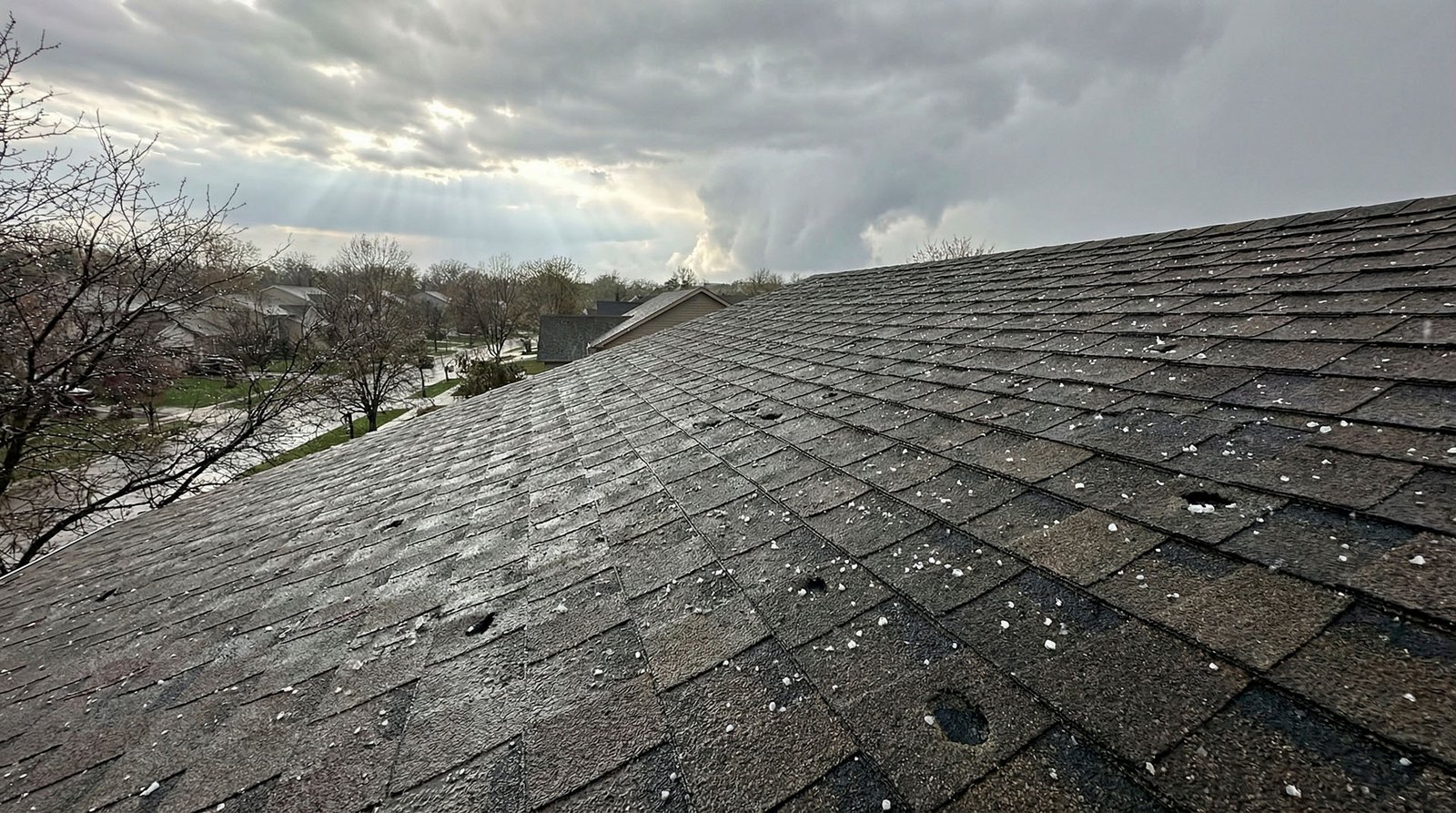
Hailstorms can sweep through quickly, but the damage they leave behind often lingers long after the skies clear. For homeowners, one of the biggest concerns after a storm is the condition of the roof. Since the roof is your home’s first line of defense against the elements, even small amounts of hail damage can lead to bigger problems if they aren’t addressed promptly.
What makes hail damage tricky is that it isn’t always obvious. Sometimes you’ll see broken shingles or dents, but other times the harm is subtle and hidden beneath the surface. If it goes unnoticed, problems like leaks or structural weakness may only show up months or even years later.
In this article, we’ll walk you through what hail damage typically looks like on different types of roofing, the signs you can spot from the ground, how to tell hail apart from normal wear, and when it’s best to bring in a professional. By the end, you’ll have a clearer picture of what to look for and why acting early matters.
Why Hail Damage Matters
Hail damage isn’t just cosmetic—it can quietly weaken your roof’s integrity over time. Some problems are obvious, while others remain hidden until they develop into costly repairs. Understanding the difference between visible and concealed damage, and the risks of leaving it untreated, underscores why early detection is so important.
Hidden vs. Visible Damage
When hail hits a roof, some damage can be easy to spot. You might notice broken shingles, dented gutters, or scattered granules around your home. These are clear indicators. However, not all damage shows itself so quickly. In many cases, hail bruises shingles or weakens their protective layers in ways that aren’t visible from the ground.
Cosmetic damage, like dents on metal, might not seem serious at first. But functional damage—such as cracks, soft spots, or lifted seams—can compromise how well your roof sheds water. Even a tiny gap can eventually let in moisture, which is why both visible and hidden issues should be taken seriously.
Long-Term Impact if Ignored
If hail damage is left unaddressed, the roof’s ability to protect your home slowly declines. Cracks or missing granules expose the underlying materials to rain, heat, and UV rays, all of which accelerate wear. Over time, this can shorten the roof’s lifespan and force earlier replacement.
Moisture intrusion is another risk. Once water seeps beneath the surface, it can lead to leaks, mold growth in the attic, and even weakened structural components. What may begin as a small dent or hairline crack can gradually develop into more serious, costly repairs.
General Signs of Hail Damage
Hail affects roofs in different ways, and the signs aren’t always dramatic. From dents and cracks to subtle surface changes, knowing what to look for can help you catch damage early before it becomes a bigger problem.
Surface Dents and Bruising
One of the most common signs of hail impact is denting. On shingles, these often appear as dark, circular spots where granules have been displaced. On metal flashing or vents, dents are easier to see since the material bends inward.
With asphalt shingles, bruising is a telltale sign. When you gently press a bruised shingle, it may feel soft or spongy, indicating the material beneath the surface has been compromised.
Granule Loss
Granules on asphalt shingles protect them from sunlight and weathering. After hail, you may see patches where these granules have been knocked away, exposing the darker asphalt underneath.
This doesn’t just change how the roof looks. Without granules, shingles lose their UV protection, which accelerates drying, cracking, and general wear.
Cracks or Tears
Sharp hail impacts can create cracks or tears in shingles. These splits often radiate outward from the point of impact and are especially concerning because they let water penetrate the protective layer.
Unlike gradual wear, hail cracks happen suddenly and can weaken the roof in specific, concentrated areas.
Soft Spots
Soft spots can form when the shingle’s underlying layer is compromised. These may not be visible, but you can sometimes feel them when lightly pressing the area. They signal that the shingle has lost structural integrity and may fail sooner than expected.
Hail Damage on Different Roofing Materials
Not all roofs respond to hail in the same way. The type of material on your home largely determines how damage appears, from dents in metal to cracks in tile or bruising on asphalt shingles.
Asphalt Shingles
Asphalt shingles are among the most common in residential neighborhoods, and they show hail damage in distinct ways. Look for dark circular marks where granules are missing, bruised areas that feel soft to the touch, or small cracks forming at the edges. Over time, these damaged spots can grow into leaks if they aren’t repaired.
Metal Roofs
Metal roofs resist many weather challenges, but hail can still leave visible dents or dimples on the surface. While some of this may be cosmetic, larger dents or bent seams can affect the way water flows across the panels. If seams or fasteners are displaced, it may eventually lead to leaks.
Tile Roofs (Clay or Concrete)
Hail can chip, crack, or completely break tiles. Often, you’ll notice fractured corners or hairline cracks running across the surface. Even a small crack can let water slip beneath the tile, compromising the underlayment and leading to leaks.
Wood Shingles or Shakes
When hail strikes wood, it tends to split along the grain. Fresh damage usually looks sharp and clean, while older splits appear weathered or worn down. Recognizing this difference is key to determining whether the damage is recent or simply due to normal aging.
Flat Roofs (Membrane Systems)
Flat roofs can be susceptible to punctures or depressions when struck by hail. You may also see blisters or areas where water begins to pool because the surface has been dented inward. Because water drainage is already more challenging on flat roofs, even minor hail damage can lead to larger issues over time.
How to Inspect for Hail Damage
Spotting hail damage starts with knowing where to look. From signs you can see at ground level to clues on the roof itself, careful inspection helps you determine whether your home may need professional attention.
Ground-Level Indicators
Before climbing a ladder, it helps to look around your property. Dented gutters, bent downspouts, or damage to siding can signal that your roof took a hit, too. Outdoor items like decks, fences, or even your car can also show hail marks, confirming the storm was strong enough to cause roof damage.
Roof-Level Clues
If it’s safe to do so, you can check the roof more closely. Look for dented flashing, cracked skylights, or vents that appear bent or warped. Another clue is an accumulation of shingle granules in the gutters or at the base of your downspouts. This often points to hail impact on the shingles above.
Safety Considerations
Not every roof is safe to walk on, especially after a storm when surfaces may be slippery. Steep slopes or older roofs pose additional risks. In those cases, binoculars can give you a closer look from the ground, or you can call a professional to perform a thorough and safe inspection.
Distinguishing Hail Damage from Other Roof Wear
Not every mark or imperfection on a roof comes from hail. Being able to tell the difference between storm damage, normal aging, or other issues helps you decide what truly needs attention and prevents unnecessary repairs.
Hail vs. Normal Aging
Asphalt shingles naturally lose granules as they age, but the process is slow and tends to leave uneven, weathered patches. Hail, by contrast, causes sudden, circular spots where granules are knocked away, often in clusters. Recognizing this difference helps you tell whether the problem stems from a recent storm or simply the natural progression of your roof’s lifespan.
Hail vs. Wind Damage
Wind and hail often strike during the same storm, but the signs they leave behind aren’t the same. Wind damage usually lifts, bends, or even tears shingles away, creating gaps that expose the underlayment. Hail damage is more direct, leaving dents, bruises, or fractures where the stones struck. Understanding these differences helps prevent misdiagnosis and ensures the proper repair is made.
Hail vs. Manufacturing Defects
Sometimes, factory defects can resemble storm damage, such as blistering, uneven granule distribution, or small surface imperfections. The difference is that hail impact typically shows a defined strike point, while defects appear more random and without a clear pattern. If you’re uncertain, a professional evaluation can help distinguish between a true storm issue and a manufacturer-related flaw.
When to Call a Professional
Some signs of hail damage are easy to miss without training or experience. Knowing when to bring in a professional helps ensure problems are accurately identified and addressed before they become costly repairs.
Extent of Damage
If you see widespread granule loss, several cracked shingles, or signs of active leaks, it’s a strong indication that professional help is needed. While a few small dents may seem harmless, concentrated or larger areas of damage can quickly lead to bigger problems if not addressed. Acting sooner rather than later helps prevent costly repairs down the road.
Insurance and Documentation
A professional inspection doesn’t just confirm the extent of damage—it also provides the documentation you’ll need for an insurance claim. Detailed reports and photographs serve as evidence, making it easier to get fair coverage for repairs or replacement. Since hail damage is commonly included in homeowner policies, proper documentation can make the claims process much smoother.
Safety and Accuracy
Climbing on a damaged roof comes with risks, and even if you make it up safely, spotting hail damage isn’t always straightforward. Small cracks, lifted seams, or hidden weaknesses may not catch your eye but are quickly recognized by an experienced inspector. Relying on professional expertise ensures nothing is overlooked and that the evaluation is both safe and accurate.
Repair or Replacement?
After hail damage, one of the biggest questions homeowners face is whether repairs will be enough or if a full replacement is necessary. The right choice depends on the severity of the damage, the age of the roof, and the long-term costs involved.
Minor Repairs
When hail damage is limited to just a few shingles or small roof sections, simple repairs are often enough to restore protection. Replacing damaged shingles, sealing cracks, or fixing flashing can resolve the issue without requiring major work. Addressing these small problems quickly also prevents them from turning into larger, more expensive repairs later.
Partial vs. Full Replacement
If the damage is more widespread, patching here and there may not provide lasting results. In such cases, replacing a larger portion—or even the entire roof—can be the more cost-effective solution in the long run. Roof age is also an important factor; investing in repeated repairs on an older roof may not make sense if it’s already nearing the end of its lifespan.
Cost Considerations
Knowing when to bring in a professional helps ensure problems are accurately identified and addressed before they become costly repairs. While homeowner’s insurance often covers storm-related repairs, deductibles and uncovered costs may still apply. Weighing short-term expenses against long-term durability helps ensure you choose the option that protects both your roof and your budget.
Preventive Measures Against Future Hail Damage
While we can’t control when or where a hailstorm will strike, there are steps you can take to lessen its impact on your roof. Proactive measures not only strengthen your home’s defenses but also reduce the likelihood of costly repairs after severe weather.
Impact-Resistant Shingles
One way to prepare for future storms is to install impact-resistant shingles. These shingles are tested and rated, with Class 4 being the highest, to withstand hail more effectively than standard options. While they may cost more upfront, the added durability can save you from frequent repairs after severe weather.
Regular Maintenance
Simple upkeep can make a real difference in how well your roof handles storms. Clearing gutters, replacing weak or damaged shingles, and trimming overhanging branches can reduce the risk of hail causing secondary issues like leaks or clogged drainage. Staying consistent with maintenance helps keep your roof performing at its best when storms arrive.
Routine Inspections
Scheduling inspections annually or after major storms gives you the chance to catch issues before they spread. Having a professional check for subtle cracks, loose flashing, or weakened spots means problems can be addressed early. In the long run, early detection often leads to easier and less expensive repairs.
Recognizing Hail Damage Early
Hail damage isn’t always obvious, and even small dents, cracks, or bruises can affect how well your roof protects your home. Being aware of the early signs, such as missing granules on shingles, dents in flashing, or cracks in tiles, gives you the chance to address problems before they worsen.
Because each roofing material reacts differently to hail, it’s important to know what’s normal aging versus storm-related damage. Taking the time to inspect carefully, act quickly, and call in professionals when needed not only protects your roof but also helps maintain the home’s overall condition.
If you suspect your roof has been affected by a recent storm, don’t wait until minor issues turn into costly repairs. Contact us today to schedule an inspection with a trusted storm damage roof repair company in Shreveport and get the guidance you need to keep your home protected!